
Airlines set specific limits on the size and weight of cabin luggage that passengers can bring onboard. Understanding these rules helps you avoid extra fees, pass through boarding smoothly, and ensure your bag fits safely in the overhead compartment. Most airlines around the world follow similar carry-on standards, but exact limits can vary slightly depending on the airline and travel class.
This guide explains the standard cabin luggage size, airline-specific rules, weight allowances, and useful travel tips to help you pack with confidence. This comprehensive guide breaks down airline luggage size limits, standard baggage expectations, smart packing methods, and essential pre-flight checks so you can travel with confidence and style.

What Is the Standard Cabin Luggage Size?
The commonly accepted cabin luggage size across most airlines is :
55 cm × 35 cm × 25 cm
(or 22 × 14 × 9 inches)
These measurements include wheels, handles, and external pockets.
Most airlines allow passengers to carry:
• One cabin bag
• One personal item such as a laptop bag or handbag
The typical weight allowance ranges from 7 kg to 10 kg depending on the airline. Choosing luggage that fits within these dimensions ensures your bag will easily fit into overhead storage bins.
Cabin Luggage Size in CM and Inches
Understanding luggage measurements in both centimeters and inches makes it easier to compare airline policies when traveling internationally.
| Measurement Type | Standard Cabin Size |
|---|---|
| Centimeters | 55 cm × 35 cm × 25 cm |
| Inches | 22 × 14 × 9 inches |
| Weight Limit | 7–10 kg |
| Allowed Items | 1 cabin bag + 1 personal item |
Personal Item Rules
In addition to one cabin bag, airlines typically allow a small item such as
Laptop bag
Handbag
Small backpack
Camera bag
This item must fit under the seat in front of you.
Special Exceptions
Airlines usually permit additional items like
- Duty-free purchases
- Infant essentials
- Medical equipment
- Small musical instruments
Verifying these exceptions beforehand ensures smoother travel, especially for longer journeys.

Cabin Luggage Size Limits by Airline
While many airlines follow similar size guidelines, each carrier may have its own specific rules. Below are common cabin baggage limits for popular airlines.
| Airline | Cabin Bag Size | Weight Limit |
|---|---|---|
| Air India | 55 × 35 × 25 cm | 8 kg |
| IndiGo | 55 × 35 × 25 cm | 7 kg |
| Vistara | 55 × 40 × 20 cm | 7 kg (Economy) |
| Emirates | 55 × 38 × 20 cm | 7 kg |
| Qatar Airways | 50 × 37 × 25 cm | 7 kg |
| Singapore Airlines | 55 × 40 × 20 cm | 7 kg |
Premium cabins such as business class and first class may allow additional cabin bags or higher weight limits.
Always verify airline policies before traveling because rules can change depending on aircraft type or route.

Tips to Pack Within Cabin Luggage Limits
Packing efficiently helps you stay within airline baggage limits while still carrying everything you need.
Choose Lightweight Luggage
Select a bag made from lightweight materials so more of the weight allowance can be used for your belongings.
Roll Clothes Instead of Folding
Rolling garments saves space and keeps clothing wrinkle-free.
Wear Bulky Items
Jackets, sweaters, and heavy shoes can be worn during travel instead of packed.
Use Packing Organizers
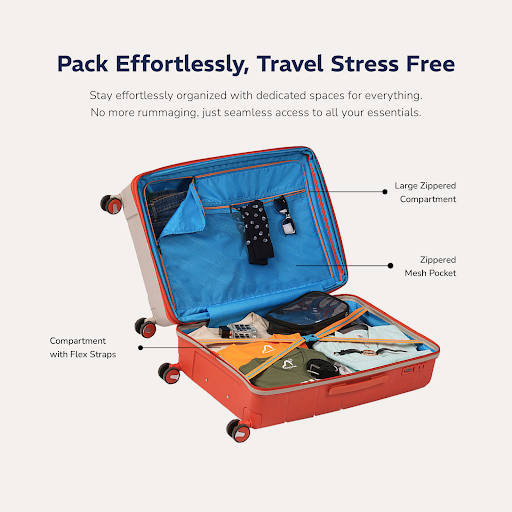
Packing cubes and compression bags help maximize space and keep items organized.
Check Weight Before Leaving
A portable luggage scale helps you confirm that your bag stays within airline weight limits.
Cabin Luggage vs Check-In Baggage
Many travelers confuse cabin baggage with checked luggage, but they serve different purposes.
Cabin Luggage
Cabin luggage refers to the bag you carry with you inside the aircraft. It is stored in the overhead compartment or under the seat in front of you.
Typical cabin baggage includes
• Small suitcases
• Backpacks
• Duffel bags
• Laptop bags
Check-In Baggage
Checked luggage is handed over to airline staff during check-in and stored in the aircraft’s cargo hold. Passengers collect it after landing at the baggage claim area.
Checked bags usually have larger size and weight allowances than cabin bags.
Items Allowed in Cabin Luggage
In addition to your cabin bag, airlines usually permit a few small personal items.
Common allowed items include:
• Laptop bag
• Handbag or purse
• Camera bag
• Small backpack
• Infant essentials
• Duty-free purchases
However, liquids carried in cabin luggage must follow airport security rules.
Most airports require liquids to be:
• Under 100 ml per container
• Placed in a transparent resealable bag
Tips to Pack Within Cabin Luggage Limits
Packing efficiently helps you stay within airline baggage limits while still carrying everything you need.
Choose Lightweight Luggage
Select a bag made from lightweight materials so more of the weight allowance can be used for your belongings.
Roll Clothes Instead of Folding
Rolling garments saves space and keeps clothing wrinkle-free.
Wear Bulky Items
Jackets, sweaters, and heavy shoes can be worn during travel instead of packed.
Use Packing Organizers
Packing cubes and compression bags help maximize space and keep items organized.
Check Weight Before Leaving
A portable luggage scale helps you confirm that your bag stays within airline weight limits.
Frequently Asked Questions
What is cabin luggage?
Cabin luggage is the bag passengers are allowed to carry inside the aircraft cabin. It is stored in overhead bins or under the seat during the flight.
What is the standard cabin luggage size?
The standard carry-on luggage size is usually 55 × 35 × 25 cm (22 × 14 × 9 inches), including wheels and handles.
How much weight is allowed in cabin baggage?
Most airlines allow 7–10 kg of cabin baggage in economy class. Premium cabins may allow higher limits.
Is a 20-inch suitcase cabin size?
Yes. A 20-inch suitcase usually fits within airline cabin luggage size limits and is commonly used as carry-on baggage.
Can I carry a laptop bag with cabin luggage?
Yes. Most airlines allow one personal item, such as a laptop bag or handbag, in addition to your cabin bag.
Conclusion
Understanding your cabin luggage size allowance and keeping track of airline luggage size limits ensures a smooth, stress-free travel experience. From choosing the right luggage to packing strategically and checking rules beforehand, every detail plays a role in how comfortably you move through airports. When you're well-prepared, every journey becomes easier, faster, and more enjoyable.